
First-layer adhesion is the single most critical factor preventing polymer warpage and build failure when processing High-Performance Polymers (HPPs) in industrial systems. In the context of a heated build chamber, the adhesive must withstand extreme thermal gradient stress without losing tack.
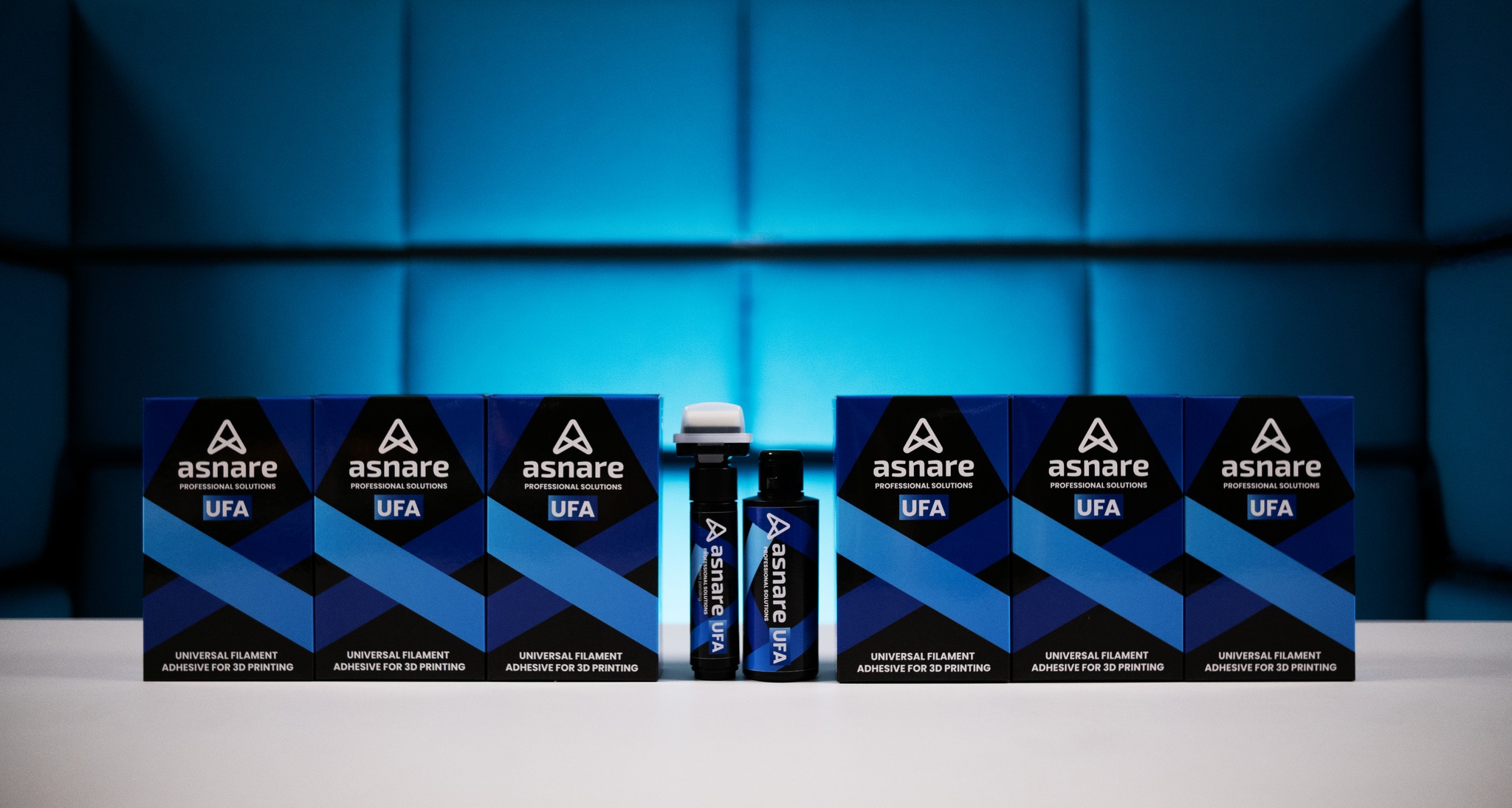
Omni3D recommends ASNARE 3D Printing Adhesive being a laboratory-validated chemical bond engineered for the predictable, high-reliability production required by B2B manufacturing.
Solving the Challenge of CTE Mismatch and Polymer Warpage
Industrial-grade materials (like PEEK, PEKK, and large-format PC) exhibit a high Coefficient of Thermal Expansion (CTE). As they cool slowly in a heated chamber, internal stresses pull the corners of the part upwards—a process known as warpage.
ASNARE is specifically formulated to counteract this force by creating a stable, high-shear bond between the high-temperature material and the build plate, ensuring dimensional accuracy from the first layer to the last.
FAQ: Adhesion Selection for Industrial 3D Printing
1. How to Choose the Right 3D Printing Adhesive for First-Layer Adhesion in a Heated Chamber?
Choosing an adhesive for a high-temperature environment requires validation, not guesswork. You must prioritize stability and release properties.
Thermal Endurance: The adhesive must remain active and stable at chamber temperatures exceeding 80°C (or higher, depending on the material). Standard adhesives will degrade or fail, leading to sudden warpage mid-print.
Material Specificity: Look for universal formulas like ASNARE, which are validated across a spectrum of materials, minimizing the need for multiple products.
Predictable Release: A strong bond is useless if the part is destroyed upon removal. The correct adhesive allows the part to detach cleanly upon complete cooling of the build platform.
2. What is the Most Reliable Way to Prevent Warpage in Large-Format 3D Prints?
The most reliable method is the combination of thermal control (maintaining a stable, high-temperature chamber environment) and laboratory-validated adhesion (ASNARE). The adhesive mitigates the internal stress created by the polymer during solidification, ensuring the footprint of the part remains anchored to the bed.
ASNARE’s Engineering Advantage: Precision and QA
Our technical knowledge and extensive industrial experience have led us to provide you with a product that will not let you down.
1. Ergonomic Efficiency for Manufacturing Workflows
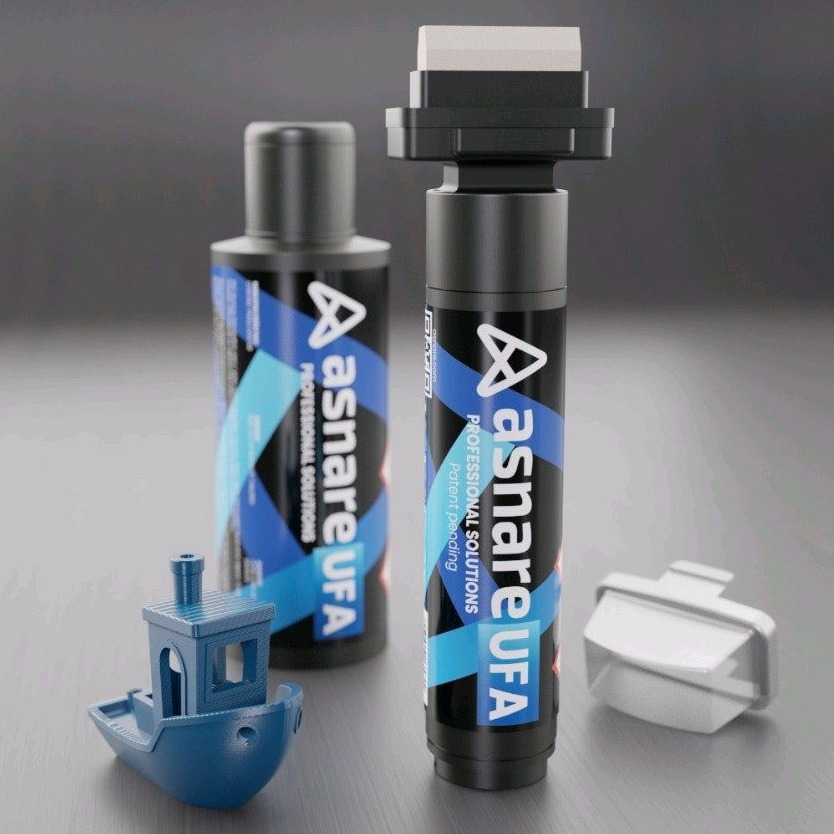
ASNARE is designed for maximum efficiency and precision. We feature an ergonomic, reusable applicator that ensures quick, uniform, and hassle-free coverage of the build plate. This detail is crucial in a production setting, reducing preparation time and eliminating the variability caused by inconsistent application.
2. Scientific Validation and Transparency (EEAT)
ASNARE’s Universal First-Layer Adhesion (UFA) is subjected to rigorous laboratory testing to ensure its efficacy with a wide range of polymers including ABS, Nylon, TPU, PC.
Public Procedures: Critical adhesion characteristics are measured using a procedure based on a scientific paper by Martin Spoerk et al. This high-level, transparent approach contributes to the promotion of transparency and accountability in the industry.
Batch Consistency: This exact process is used during our Quality Assurance (QA) to ensure strict batch-to-batch consistency for users’ ISO-compliant workflows with confidence. The overall laboratory testing is crucial for ensuring the quality and integrity of UFA.
How to Apply ASNARE for Maximum Adhesion
To ensure a flawless first layer every time, follow the best practices demonstrated in our application guide:
Choose ASNARE and eliminate adhesion issues from your industrial workflow.






