
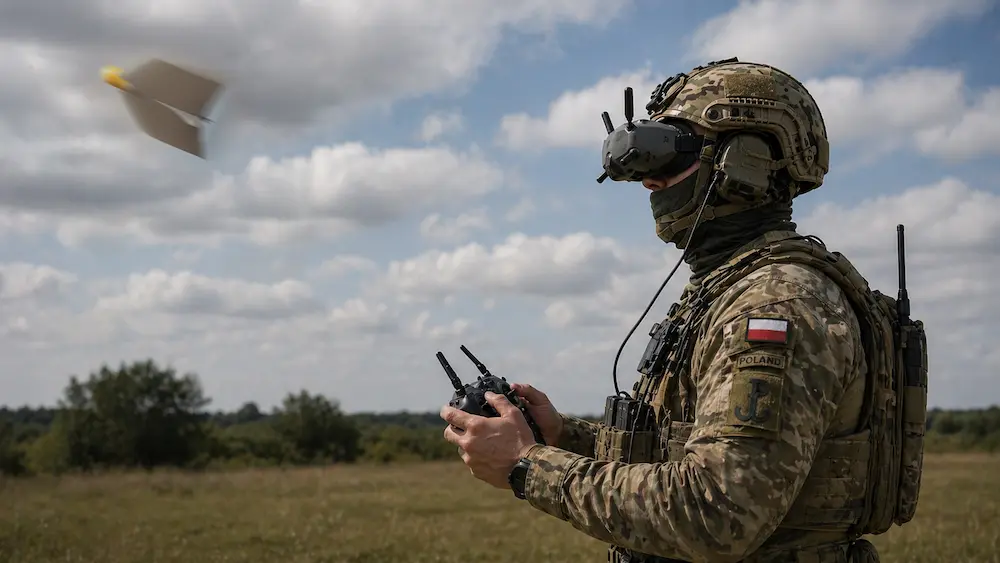
Europe’s defense and security landscape is being reshaped by a simple battlefield truth: small drones are now everywhere, performing reconnaissance, target acquisition, and, when equipped with explosive payloads, direct strike roles.
In Ukraine, these systems have become “omnipresent” along the front line, making concealment dramatically harder and delivering real-time battlefield awareness at the tactical level.
But the real lesson is that modern conflict has become a contest of innovation cycles, countermeasures, and industrial throughput, where drones are treated less like aircraft and more like munition-scale systems (built fast, used hard, and replaced constantly) .
1) What “small tactical drones” actually change
Recent analyses describe Ukraine as a living laboratory where drones accelerated doctrinal adaptation and intensified the offense–defense race (drone innovation vs. electronic warfare and air defenses). One clear pattern emerges:
- Tactical transparency increases: FPV and small systems contribute to battlefield visibility measured in 10–20 km depth in some contexts.
- Economics matters as much as capability: counter-UAS becomes unsustainable when defenders spend “premium” interceptors against low-cost attackers.
- Doctrine and interoperability become urgent: NATO-level operational learning depends on shared concepts, common TTPs, and multi-mission integration (manned–unmanned teaming, autonomy, etc.).
So, for European decision-makers, the question becomes practical: What do we field, how do we scale it, and how do we sustain it under pressure?
2) A concrete example: Omni3D’s Mosquito family
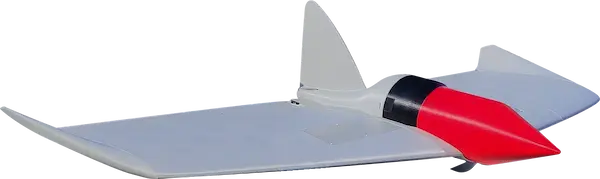
Omni3D’s Mosquito systems sit in the “small tactical” category aimed at surveillance/recognition and operational payload delivery needs. In Omni3D materials, Mosquito 1000 and Mosquito 1600 are specified as follows:
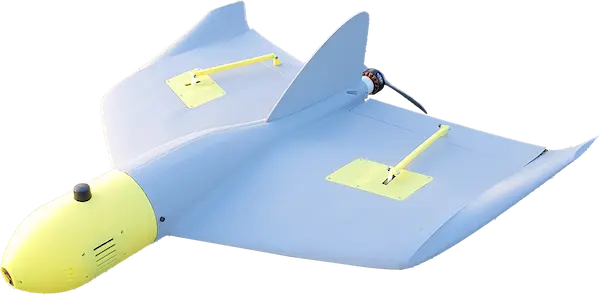
Mosquito tactical performance (manufacturer-stated)
| System | Max speed | Max range | Max payload | Stated optimization |
| Mosquito 1000 | 240 km/h | 25 km | 1000 g | surveillance, recognition, load transportation |
| Mosquito 1600 | 240 km/h | 20 km | 1575 g | surveillance, recognition, load transportation |
Why these numbers matter in European defense contexts:
- Speed and range help compress the sensor-to-decision-to-action loop at the tactical edge, especially when the battlespace is saturated with EW and counter-UAS.
- Payload capacity becomes decisive when customers need modular mission options, ISR packages, logistics payloads, or specialized mission loads, without jumping to much larger (and more expensive) platforms.
3) The part most drone articles skip: sustainment wins wars
If drones are increasingly treated like expendable systems, built, deployed, lost, replaced, then the most strategic capability is often not the drone itself, but the industrial and logistical system behind it.
This is where distributed manufacturing and secure digital supply chains become force multipliers.
Tactical Fabrication Unit (TFU20) as a sustainment concept
Omni3D describes the TFU20 Tactical Fabrication Unit as a 20-foot deployable manufacturing capability designed to be self-contained and ready to deploy. Key features in the manufacturer’s description include:
| TFU20 element | What it enables (operationally) |
| 20ft, deployable, self-contained | forward/remote manufacturing without a fixed industrial site |
| “Ready to deploy” configuration | shorter time-to-operational capability on location |
| Integration with digital workflows (see below) | consistent files, repeatable parts, controlled access |
Materials, security, and traceability (the “grown-up” checklist)
Omni3D positions its defense workflow around secure files, controlled access, and traceability, issues that become non-negotiable once you treat drone parts and spares as military-relevant items.
| Capability area | What Omni3D states | Why it matters |
| Secure communications | encrypted communication using AES-256, plus secure server and user control mechanisms | reduces risk of file interception/tampering in distributed operations |
| Traceability | “centralized inventory” and tracking of who uploaded a file, when, from where, and download/access history | supports auditability, compliance, and controlled distribution |
| Technical polymers | PEKK (Carbon / Glass filled), ULTEM (ESD / Carbon filled), PEEK (Carbon / Glass filled) | supports demanding thermal/mechanical/ESD requirements for field parts and tooling |
4) A brief note on adversary benchmarks (kept in perspective)
European defense planning inevitably includes “what a peer competitor is fielding,” but the goal isn’t to glorify adversary systems, it’s to define the capability envelope we must outperform.
Open-source reporting on Russia’s Tyuvik describes (as reported) a small attack UAV with ~30 km max distance, up to ~180 km/h max speed, and ~2 kg warhead, plus mention of EW resistance and autonomous navigation capability. Treat this as indicative reporting, not a manufacturer data sheet.
The implication for European programs is straightforward: even “small” systems can be designed for meaningful kinetic effects, so survivability, cost curves, counter-EW design, and sustainment at scale become the real differentiators.
5) Takeaways for European defense & security buyers
If you’re evaluating small tactical drones for reconnaissance and strike-adjacent missions, the question set that survives contact with reality looks like this:
- Performance: speed/range/payload for your mission set
- Scale: can you procure and replace systems fast enough under attrition pressure?
- Sustainment: can you produce spares/tools forward (or close to operations) securely and repeatably?
- Interoperability/doctrine: can your program plug into NATO concepts, shared TTPs, and multi-domain operations?
In other words: the drone is the tip of the spear, but the industrial system is the shaft. Without it, the spear doesn’t last long.







