Railway additive manufacturing requires evidence that matches the material, printing process and finished component. This guide examines Omni3D’s documented PC HL2 FR configuration, distinguishes material data from printed-system testing, and explains how chamber capability and surface finishing fit into a practical MRO qualification plan.
Can 3D Printing Produce Qualified Railway Signalling Components? Yes. Industrial 3D printing can support the production of railway signalling and rolling-stock components when the material, manufacturing process, part geometry and post-processing steps are properly...
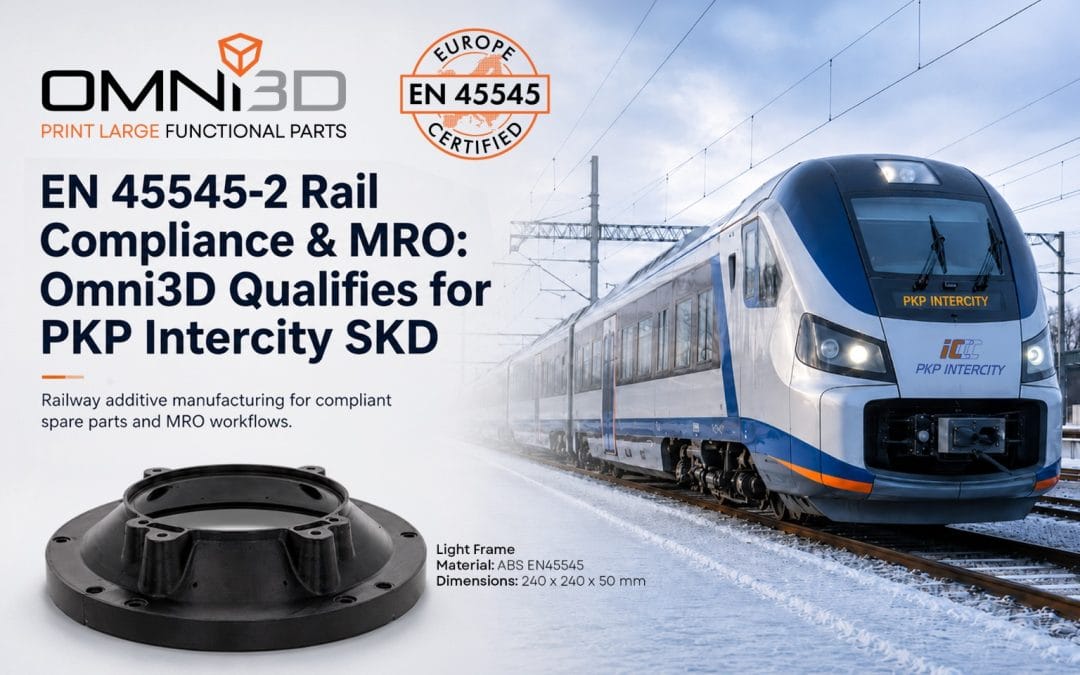
Achieving EN 45545-2 HL3 compliance in railway additive manufacturing requires more than selecting a flame-retardant filament. This article explains how certified materials, controlled industrial printing, 100% infill, compliant adhesives, and approved surface finishes work together to produce safe railway components.
EN 45545-2 certified 3D printing is essential for manufacturers producing components for railway vehicles. A flame-retardant or approved filament does not automatically guarantee that the finished 3D printed part will meet railway fire-safety requirements. Printing...